Fashion's next Frontier Is Your Home.
A table at Milan Design Week sent me down a rabbit hole: why fashion houses are suddenly obsessed with your living room, and the data proving it's here to stay.

Hi Friend,
I'm glad you're here.
A few years ago, I was on my way to Venezia to meet friends for some holidays (+ the Biennale for me), with a pit stop in Milan first for some solo time in one of my favorite cities. On the way from the airport, I found out it was Milan Design Week. Never been to a design fair before, wasn't sure what to expect but went anyway.
TL;DR for skimmers:
- Fashion houses are expanding into home because interiors run on a slower clock than apparel. Nobody redoes a living room every season, so the category holds full price and deepens customer lifetime value.
- Missoni is the proof point. Home is 30% of revenue at a house doing over €130M, and it just opened its first standalone home store in Brera, Milan.
- The move is decades old. Tommy Hilfiger launched bed and bath in 1998, Zara Home has run since 2003, and Dolce & Gabbana Casa launched in 2021.
- Gen Z is driving demand by staying in. 68% say going out costs too much (Harris Poll, 2026), and hosting at home is one of their main money-saving strategies.
- Luxury homeware is projected to grow from $151.82B in 2025 to nearly $239B by 2034.
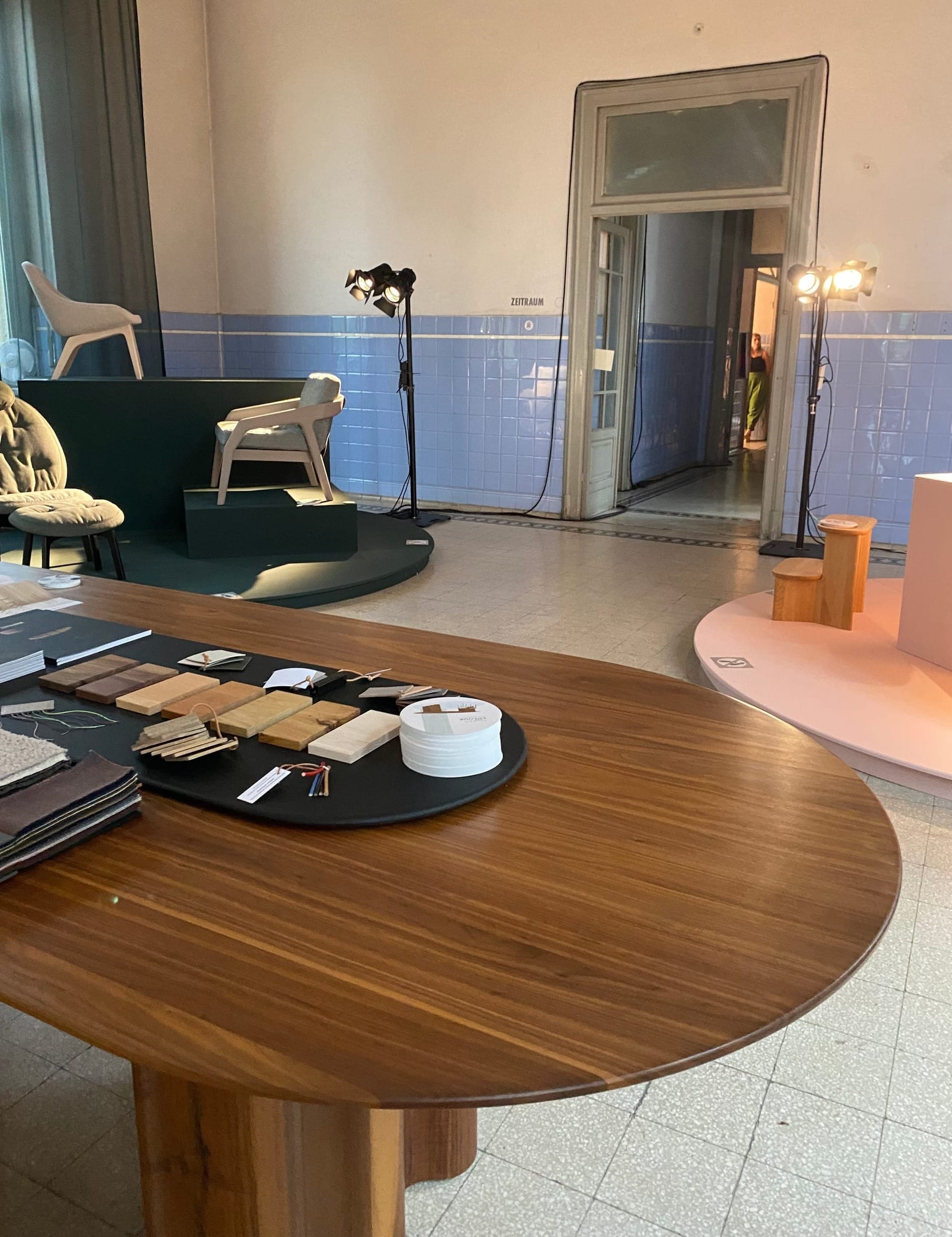
Galleries, showrooms, random exhibition spaces, all hosting something that week. I walked it like I was going to art exhibitions and enjoyed every bit of it. One day, one particular piece stopped me: a walnut table with fluted, folded legs and an oval top. Nothing unusual about a table at a design fair. What caught my attention was what was on it: a row of glass jars running down the spine, each filled with raw material samples, fiber, textile scraps, yarn. I stopped for a few seconds to touch and feel the samples. It looked exactly like a fabric library, the kind you'd find in a couture atelier, where a team does research before the next collection. Design and fashion are closer than I thought...
Have you ever noticed that the most fashionable people you know also tend to have the best interiors? Unique vintage pieces, interesting colour combinations, shapes and textures. Where's the connection? I think it comes down to taste itself. An eye for form, colour, and proportion doesn't stay confined to clothes, it shows up wherever someone makes things. Design, being one of them.
While doing research for this article, I stumbled on Interior Motives, billed as the first documentary exploring the interconnectedness of fashion and interior design.

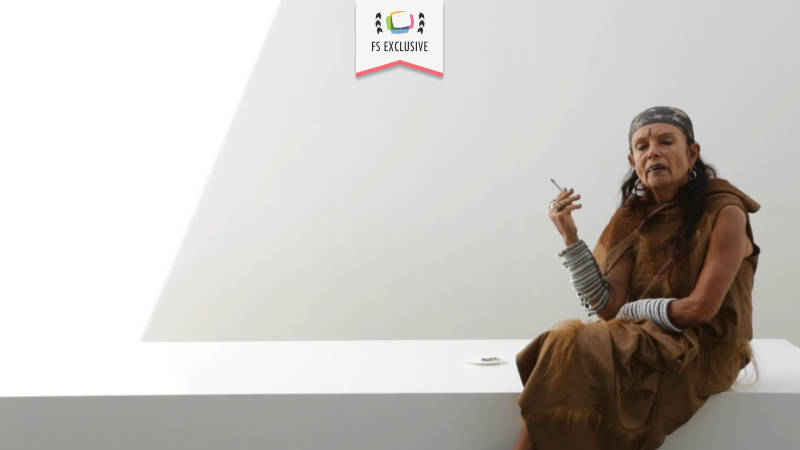
It's short, free, and genuinely worth the watch!
What struck me watching it is how far back this connection goes. The documentary traces it back to the 90s when Donna Karan, Tommy Hilfiger, and Oscar de la Renta were all venturing into home and lifestyle. Hilfiger talked about wanting a full lifestyle brand, not just a fashion brand, and launched his bed and bath line in 1998!
What happened since?
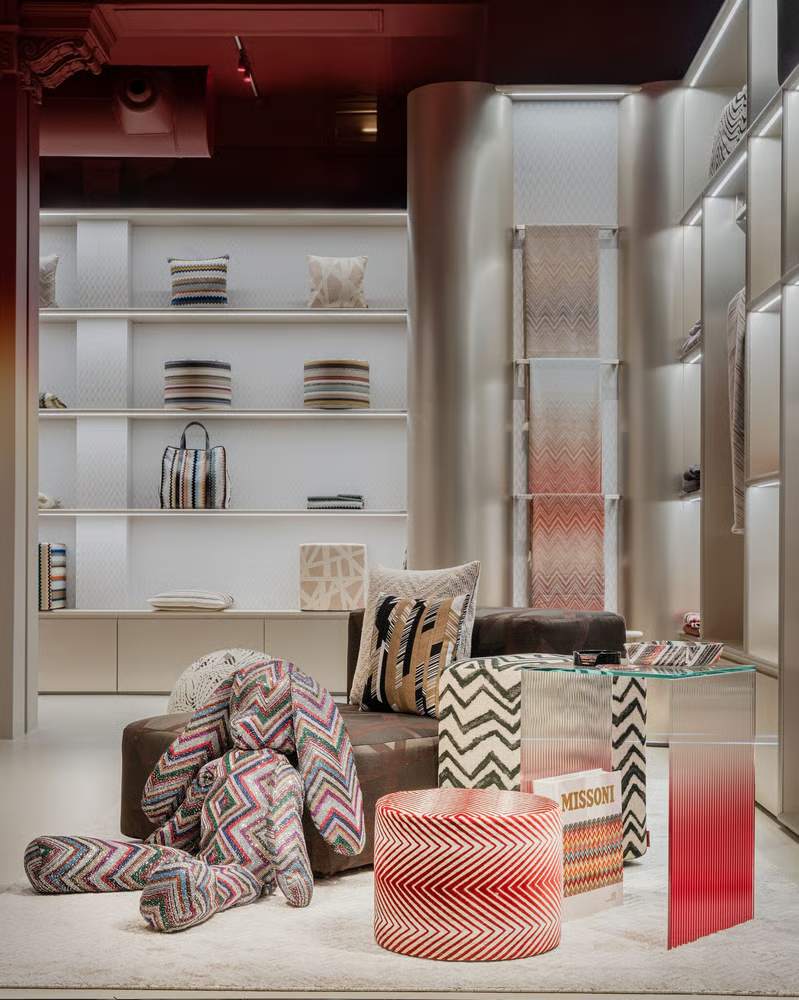
Well, the money started betting on the idea too, or at least, it's not getting in the way of it. Missoni, the house that's been printing its signature zigzag onto sweaters and sofas since the 80s, just went through a full ownership shift: the Italian investment fund FSI took a majority stake of roughly 73%, with the Katjes family's Quiet Luxury vehicle picking up another 27%. Revenue has more than doubled past €130 million. Home is already 30% of total revenue, enough that Missoni just opened its first-ever standalone home store, in Milan's Brera district. Creative director Alberto Caliri has been doubling down publicly: residential design projects have gone from one every three years to roughly seven annually, and as he put it, "fashion and design are closely connected, they blend naturally."
And Missoni is not the only luxury brand making the move. Tiffany & Co., now part of LVMH, released a sculptural tableware collection with French sculptor César in 2024. Dolce & Gabbana launched Casa in 2021, testing the waters first with a Smeg kitchen-appliance collaboration in 2018. Zara Home has been running since 2003: bedding, cutlery, glassware, etc. proving how strong this phenomenon is, scaling down to fast fashion, too. If people already trust you with how they look, they'll trust you with how they live.
Why now?
Back in 1988, Russell Belk wrote "Possessions and the Extended Self", still one of the most cited papers on the subject, arguing that we use what we own to construct who we are. Clothes have always done that job. A 2025 study in Frontiers found that people now, do the exact same thing with their homes: decorating as identity-building, community-forming, the same signaling mechanism as personal style, just aimed at a room instead of an outfit. What's surprising is how little research exists specifically on home decor as identity, compared to how much exists on fashion but I see it changing in a few years.
Other potential reasons: more people work from home now than they did five years ago (Covid and all), and prioritise their home more, simply because they're in it more.
There's also a generational piece...The Gen Z is going out less, and not only by choice. A Harris Poll found 68% say going out "isn't worth the damage it does to my wallet" and nearly three-quarters now spend their weekends at home. Consequence? 85% of Gen Z say they've developed cost-saving social strategies over the past year, and hosting friends at home is one of the main ones. If the party moved into the living room, the living room has to "give".

Add a growing appetite for pieces that don't look like everyone else's, and the incentives line up: your home is doing some of the identity work your wardrobe used to do alone, because it's increasingly where people actually see you.
Then there's social media adding more fuel to it. Pinterest has basically become a home moodboard machine: people (including myself) are pinning rooms and furniture. Some home decor searches were up 220% year-over-year in Pinterest's own trend data; double the growth of the biggest fashion searches reported in the same study.
Pop culture noticed too: there's now a whole show built around it, Interior Motives Show, where contestants guess a stranger's age and identity just from photos of their bedroom. Interior design as entertainment the same way Project Runway made fashion something people watch for fun.
Interior motives episode with Courtney Love
What does this mean for brands?
Apparel margins have been thin for years, and fashion's trend cycle has only sped up, which is exactly the problem. Interiors run on a completely different clock. Nobody redoes their living room every season. That's precisely what makes the category valuable: it's a slower, steadier place to put a brand's aesthetic point of view, one that customers live with and return to. And the category itself is big enough to be worth the move: luxury homeware alone is projected to grow from $151.82B in 2025 to nearly $239B by 2034.
BoF Insights has made the same case from the finance side: lifestyle category extensions open new revenue streams and, more importantly, deepen customer lifetime value: you're not just selling someone a dress anymore, you're selling them a relationship with how they live. We've already seen Fendi and Dolce & Gabbana move on this. Missoni just proved it can anchor a third of a business. For a fashion house watching its margins get squeezed by markdowns and fast fashion, home is one of the few categories left where "trust me, I have taste" still converts into something people will pay full price for, year after year.
Writing this, here's what I'm walking away with: a genuine excitement to keep learning about design. Turns out it's just as fun as fashion. Same instinct for beauty and art, pointed at different parts of your life: one at your body, one at the space you come home to.
André Leon Talley put it better than I could: "I like the idea of being warm and secure. That's what home should be. That you have a sense of warmth, security, love, and you love the things around you and surround yourself with beauty."
That's the theme running through all of this: wanting the things around you to be worth looking at. Interiors are the new frontier of fashion. Worth watching closely from here.
— Lauren
Fashion Stack is a personal project. Views are my own.